Tuesday, November 25, 2014

Global: African Journal of Social Work (AJSW)

                                 screenshot_28

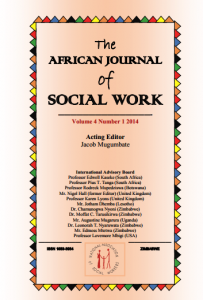
The African Journal of Social Work (AJSW)
Retrieved from: http://cdn.ifsw.org/assets/ifsw_45724-4.pdf

This refereed journal serves as a forum for exchanging ideas and knowledge relevant to social work practice, education and research in the African region. Producing two issues a year, the Journal is published by IFSW member the National Association of Social Workers (Zimbabwe) and is committed to reflecting culturally relevant and appropriate social work practice from throughout Africa.

Daniel Asiedu, IFSW Regional President for Africa said from Ghana, “The journal creates a tool for African social workers to be able to further develop our unity and identity as professional practitioners. It will greatly assist in growing our profession in a continent where it is very much needed”. Zimbabwean based Noel Muridzo, the IFSW Member-at-Large for the African Region added, “The Journal also creates the opportunity to share the in-depth experience of social work in Africa with the rest of the world”.

IFSW Secretary-General, Rory Truell congratulated the editorial team, writers and all the people involved. He said, ‘Producing a journal is a major effort but very worthwhile. There are so many exciting social work approaches coming from Africa. This journal will capture the voice and experience of African practitioners – we will all benefit from this”.

AJSW’s editors have said they are happy to receive contributions from all over the world, if they are relevant to African social work.

To find more details on how to submit articles, subscribe to the journal and read this edition for free here.

Sunday, November 23, 2014

Canada & US: Social workers in libraries

Homeless find hope, refuge and community at public libraries

Social workers are joining librarians to provide help where it's needed


As libraries evolve to reflect the digital age, many are finding their buildings increasingly filled with those from the fringes of society looking for warmth, safety and access to technology. And some of those people are finding unexpected help.

In 2006, Colin Mulholland was homeless, an alcoholic and seething with rage.

"I went through this chaos and ultimately got to the darkest that I've ever been," he said.
But each morning after leaving a downtown Edmonton homeless shelter, he would make his way to the public library, a place of refuge during those dismal days.

"The library is a natural, because you can come, you can sit. You can read books,” he says. “I'd pretend to read books, because mostly you don't get enough sleep in the missions. So I'd kind of like fake read and sleep."  

Jared Tkachuk is also a regular at the library, but for very different reasons. The veteran social worker was hired to roam the stacks and corridors of the library to seek out and support those like Mulholland who are down on their luck.

"We do a lot of what I call helping to restore dignity for people," he says. "So there's a big social or spiritual component to the job."

Over several months Tkachuk became a friend, listening with a sympathetic ear, and subtly guiding the angry, often drunken Mulholland onto a new path.

"It's a funny story between us,” Mulholland recalls, “because for the first few months that I was bumping into him there I didn't even realize that there was an outreach worker relationship going on between me and him."  

While social work may seem like an unusual role for public libraries, it’s a natural fit in Edmonton, according to Edmonton Public Library deputy CEO Pilar Martinez.

“It really is information. It’s a different type of expert that’s providing that information and support so it aligns very, very well with what we’re already doing.”  

A growing trend

A public library can be a warm, safe place, where those without homes, computers or smartphones can check email, Facebook accounts, and even read.

San Francisco was among the first to bring a professional social worker into its library system about six years ago.

“San Francisco was struggling with homeless issues for a number of years,” says library spokeswoman Michelle Jeffers.

Homeless people were using the library, but staff were having difficulty coping with the complexity of their needs. “They have issues bigger than the librarian can answer for them.”

Having the social worker on site has made a difference, she says. “People have been placed into housing and are getting back on their feet.”

Several of those helped by the library have returned the favour, working as health and safety associates at the library.

The four paid positions are like an internship that allows people to give back, while acquiring skills and adding to their resumés.

Now at least five libraries in Canada employ social workers.

Brantford Public Library in Ontario added a child and youth worker in 2010 in response to problems with unruly teens.

The program was such a success that it now brings in a speech pathologist, public health nurse and dietitian. And the once unruly teens now form the core of a popular youth café held at the library every Wednesday night.

Success in Brantford led to a pilot project in Hamilton, which has just been made permanent.

“We are a community resource, a community hub,” explains Hamilton library spokeswoman Melanie Southern, who calls the library “a common, safe location.”

In Toronto, a public health nurse now spends three days a week at its reference library. Winnipeg has hired an outreach worker to help patrons connect with social and community agencies.

Other libraries across Canada are watching with interest. In St. Johns, it's an issue of funding, not lack of interest. Regina’s Public Library is watching the national trends.

Nature of homelessness changing

“I think some things have changed,” says Eric Weissman, a sociology professor at College of New Caledonia in Prince George, B.C.

Weissman was drug addicted and homeless as a youth, when the local library was both refuge and community centre. The biggest change, he says, is the nature of homelessness.

“A lot of homeless people actually have jobs and have families and need resources, so they use libraries.” he said. “Libraries have always been that central place, that community centre. It’s one of the mandated qualities of libraries.”

He calls libraries “the Alamo of urban space for the homeless.”  

“It’s a last stand. I mean urban space is stacked up against the poor,” he said. “When people are occupying urban space and reducing its value we tend to push them away.” 

Tkachuk likes to recall the success stories, even if on the surface they may not seem like much.

A year ago he helped a man with schizophrenia and addictions, who had spent 25 years on the street, finally move into a small apartment.

The man never beat his addictions and died last month, just 10 months after moving into his home.
"The first thing a colleague said to me is at least he didn't die on the streets. And sometimes that's a success story.” Tkachuk notes. “And sometimes it's someone going to university.”

Mulholland is the success story the library likes to point to.

Now 47, Mulholland is in his first year of a bachelor of arts program at the University of Alberta. He’s already received a diploma in social work from a community college.

He credits the library and its outreach worker for helping change his life. "He and the library became a safe place for me to reconnect to."

Mulholland eventually wants to earn a master's degree — a big jump for someone who had no hope and saw no future for himself. He says libraries can make a difference in many more lives.
Friday, November 21, 2014

Canada: Newfoundland social work students launch documentary on missing and murdered Aboriginal women and girls

MUN social work students launching documentary

Film features interviews on topic of missing and murdered aboriginal women and girls

First-year social work students at MUN will launch a documentary tonight about missing and murdered aboriginal women and girls.
The Telegraph, (2014). Retrieved from: http://www.thetelegram.com/News/Local/2014-11-21/article-3946977/MUN-social-work-students-launching-documentary/1

Nineteen students have been working on the project since September, when they set out to raise awareness of a countrywide issue they say deserves more attention.

“From what we’ve been learning there hasn’t been much action from the government concerning this issue,” said Courtney Caines of St. John’s.

“Not many people even know about it. For example we didn’t know about it before we started the social work program, so we want to raise awareness.”

Caines met with The Telegram this week, along with classmates Jessica Ricketts of Stephenville and Kelsey Chaisson of Cornwall, P.E.I., to discuss the project.

“We did interviews around campus and … out of all the people we interviewed, I think there was one student who actually had heard of it,” said Ricketts.

The goal of the documentary is two-fold, they said: to increase awareness and to add their voices to those asking the federal government for an inquiry into the issue.

The students were moved after attending the Sisters in Spirit vigil in October, at which Loretta Saunders’ mother spoke.

“Going to the vigil and hearing the stories from the families, it was just so much more real, which is why I think it was so important that we do the community service for something that we hear about that’s so serious. Because then we figure out what it actually means to them,” said Ricketts.

“When we went to the vigil, we actually realized that they need our help, and as a future social worker, that’s so important to me. … We’ve been put in this position of privilege where this stuff isn’t happening to us, and I think it’s important that we make them aware that we don’t think it’s not a big deal.”

The project has been eye opening for the students. Chaisson said she feels she has grown from the experience, and she has learned the importance of working collaboratively with people of different backgrounds and cultures.

“They’re the experts of their own lives, so in order to help them we got to talk to them,” she said.
Everyone is welcome to attend the launch of the documentary tonight at 7 p.m. in MUN’s engineering building.

The documentary will be uploaded to YouTube after the launch, the students said.

MUN School of Social Work documentary: Beginning with Our Voices
This video was made as part of a community service learning project by the social justice 2711-003 social work students from Memorial University of Newfoundland's School of Social Work, in partnership with the Aboriginal Resource Office of Memorial University. Retrieved from: http://www.youtube.com/watch?v=2WRxPUHmC8w

CBC National documentary on Canada's missing women


Sunday, November 16, 2014

Professional: Manitoba Social workers to become fully regulated

Editor: This means B.C. is the only province in Canada where full title protection does not exist. The mandate of the BC College of Social Workers is protection of the public. We should be asking why the B.C. government continues the exemptions of it's own child protection workers from full registration.when they have removed those for other social workers, such as those working in the Health Authorities. 

Social workers to become fully regulated: Self-governing college comes into effect April 1
Owen, B. (2014), Winnipeg Free Press. Retrieved from: http://www.winnipegfreepress.com/local/social-workers-to-become-fully-regulated-282527861.html

Social work in Manitoba will become a fully regulated profession beginning April 1.

The move, spelled out in regulations recently approved by cabinet, will end more than five years of efforts to ensure anyone who practises social work in Manitoba is registered with an approved, self-governing body. Registration would also see members of the profession meet standards of competence and be governed by a code of ethics.

"It's been quite a long time coming," Miriam Browne, registrar of the Manitoba Institute of Registered Social Workers, said Wednesday.

Browne said when the regulations take effect, under the 2009 Social Work Profession Act, the institute will formally change its name to the Manitoba College of Social Workers.

"We think it's a big step forward because for the first time ever, the title of social worker will be a protected title," Browne said.

"That means you can't call yourself a social worker after April 1 if you're not a member of the Manitoba College of Social Workers."

The change also meets one of the recommendations of the inquiry into the 2005 death of Phoenix Sinclair. The child moved in and out of foster care and suffered horrific abuse at the hands of her mother and stepfather before dying from her injuries. Her death was not discovered until the following year.

Commissioner Ted Hughes made 62 recommendations for improving the province's child-welfare system in a report released last January.

Hughes recommended all social workers hired by agencies to deliver services in the province have a bachelor of social work or equivalent degree as recognized by the college.

The regulations allow current social workers, who do not have a degree, to apply to the college as long as they meet certain requirements, such as producing documentation that he or she has worked as a social worker for at least 4,400 hours in the past five years.

"Social workers will receive far better support being members of a regulated profession," Browne said. "The public will also be far better protected by knowing there are minimum standards and minimum qualifications and ongoing professional development and ongoing training for members of the college."

Browne said one-third of the college's board of directors will be filled by members of the public. Its proposed size is 12 to 15 people.

"There will be public representation on the board and on committees, and certainly on the complaints and disciplinary committees," she said.

Under the regulations, those applying to the college must undergo criminal-record, child-abuse registry and adult-abuse registry checks.

Applicants must also "satisfy the registrar that his or her past and present conduct affords reasonable grounds to believe that the applicant will engage in professional practice safely, competently and ethically," according to the regulations.

bruce.owen@freepress.mb.ca
Republished from the Winnipeg Free Press print edition November 13, 2014.


Intro to Social Work: Understanding Macro, Mezzo, and Micro Levels of Analysis

         An Ecological Model of Factors
Influencing Diet and Physical Activity. (The arrow extending across
the four levels suggests that factors or barriers extend into and
interact across various levels.)

                       An Ecological Model of Factors Influencing Diet and Physical Activity

Intro to Social Work: Understanding Macro, Mezzo, and Micro Levels of Analysis


The debate about micro versus macro concentrations within the social work profession continues to rage on. For me, it was not that much of a debate until I began engaging with social workers around the world via social media. Since then, it has changed my lens of how I view the world into a more  of macro thinker. Up until the last year, I was happily living in my own micro bubble. 

The trend or message from others on social media is that Macro Social work has lost it’s appeal or the profession is being skewed into a clinical/micro focus. There also continues to be a lot of discourse about social workers’ roles on a larger stage. When students take Intro to Social Work, are we fully explaining the inter-connectivity between micro, mezzo, and macro levels of analysis in social work?

Has our role been stymied by this Micro and Macro separation? In my opinion, the strength of social work is it’s versatility, but the profession can’t seem to get out of its own way. Rather then widen the debate, we need to strengthen the two concepts, and Social work programs need to focus on “the space between”. Mezzo social work, also referred to as “meso” in other disciplines, is often left out of the conversation.

Micro, Mezzo/Meso, Macro are levels of analysis which are the cornerstones of  ecological systems theory and practice. The application and understanding of these levels are not only germane to social work, but they are integral in the analysis of business, finance, politics, science, and more.

According to Social Work Degree Guide website,  it has this to say about mezzo level social work:
Instead of working with an individual or a familial group to promote individual change, you will work with groups to focus on promoting cultural or institutional change. Because social workers practicing mezzo work face unique challenges, they generally will have experience in both micro and macro work and use this experience in tandem. You will need to be experienced with both interpersonal relations and community involvement when you choose this level of work. Read More
In a recent Twitter chat about Sustaining innovation in macro social work, the importance of macro social work came up. Most importantly, Carly Levy responded to the chat stating that “Our desire to be recognized as licensed clinicians dominates social work culture and distorts macro social work purpose”. As a direct clinical provider with a growing appreciation for Macro work, this perfectly illustrates the impasse social work is facing. Rather than clinical social work distorting macro social work, we need to examine ways clinical social workers can enhance macro process as well as ways macro theory can enhance clinical practice.

To illustrate my point, the first therapy group I ran was about 4 years into my career. I had already been practicing family and individual work for quite some time. During this time of clinical growth into groups, the individual skills I learned dovetailed well with group work. Also, I was learning more group work theory  which enhanced my family work. Although work in groups enhanced my thinking about organizational change and the tone an organization sets, facilitating organizational change is where social work can excel. Taking clinical skills and growing them into macro skills can make for a powerful combination.

Individuals with Macro social work skills for systems analysis, community organizing, grant writing, and coalition building in policy making positions will affect how we practice. Community Organizer, Mozart Guerrier, stressed in his TedxSyracuse talk the need for listening and consensus making. He says without listening to what people need, it will limit trust and change will not happen.

As social workers we are often referred to as “change agents”. Change can happen through direct practice but also can be achieved through change at the organizational and community level. There is a huge space between what happens in an individual therapy session and what happens on Capitol Hill. We should attempt to get away from where change happens but how it happens.

No matter what our concentration in graduate school, social workers all have a notion of how change happens. By making the micro distinction this distorts how change happens, and we have the tools and the talent to make change happen at many levels. It is where micro and macro meet that can cause a significant amount of change. Utilizing the macro, mezzo, and micro levels of analysis in all of our practice areas is the best holistic approach to helping our profession and our clients improve outcomes.

Micro, Mezzo, Macro Social Work: Introduction to Social Work (Extended Version)

Esther Gillies, USC School of Social Work. Retrieved from: https://www.youtube.com/watch?v=jJXRB1V5eVw 


Saturday, November 15, 2014

Professional Development: Discernment Counselling for Couples

Discernment Counselling

Bill Doherty, Ph.D, co-founder and internationally recognized marriage expert has been working with therapists, legislators, lawyers and mediators for years to better serve couples struggling with divorce decisions.  As a researcher, he has documented high levels of divorce ambivalence among couples even after starting the divorce process.  As a therapist, he has developed Discernment Counseling, a new way to work with divorce ambivalence presenting in the form “mixed agenda” couples where one partner is leaning out of the marriage and the other wants to save it.  This is a frustrating and challenging situation for therapists, lawyers, mediators—and most of all, for the couples themselves.

From Clinton Power of Australia Counselling:

The founder of this protocol, Bill Doherty, Ph.D., is currently in Australia working with various agencies for training and a possible dissemination through government money aimed at divorce prevention.

Bill has developed a 25 hour online training to equip therapists with a new way of working with one of the most challenging types of couples, who he calls mixed-agenda.

In these couples, one partner is uncertain if they want to stay in the marriage or long term relationship, while the other is often desperate to work on saving the relationship. This presents numerous challenges for therapists, because no matter what you say, you are aligning with one of the people and the other is upset or stalls out the therapy process.

You can listen to an in-depth discussion of Discernment Counselling in the podcast interview I did with him here.

Developed over his 35 year career, with research backing and a book in the works through the American Psychological Association, this is a protocol to consider adding to your skill set if you work with couples.

In this free video series, Bill explains exactly why this model works for these challenging couples, what it involves for you as a therapist to learn it, and how he hopes to make this new type of therapy a household name.

Click here to get the free video series. 

*******************************

Global Social Work: Nepal joins IFSW

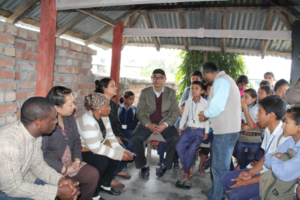
                Social workers providing community education in Sunsari District in the eastern development region of Nepal
Social workers providing community education in Sunsari District in the eastern development region of Nepal

The International Federation of Social Workers is delighted that Nepal has joined this week as a full member. The application was made by The Social Work Association of Nepal (SWAN) and voted on worldwide by postal ballot during October.

SWAN is the national professional association representing social work in Nepal. It is a new organisation that signifies a major step forward for social work at the national level. While social work training has been available since 1996 there has been little support or recognition for Nepalese social workers. SWANs foundation changes that dynamic.

Dr. Dilli Ram Adhikari President of SWAN says, “We are promoting social work education and practice by uniting social workers in Nepal for social, economic, psychological and spiritual welling of deprived and marginalized people”. He says, SWAN aims to:
  1. Provide support to academic institutions for developing standards curriculum in social work and its promotion.
  2. Policy advocacy on social development issues, social security, social policy, social inclusion and human rights.
  3. Conduct research on existing social, economic, cultural and indigenous social work practice in Nepal and publish the findings.
  4. Establish network at national and international level with social work communities and academic institutions.
  5. Work in close collaboration with different social organizations for improvement of social-economic condition of the marginalized communities.
  6. Exchange of technology and knowledge with international//regional/national institutions.
IFSW Secretary-General, Dr Rory Truell said, “We are very excited that Nepal has joined IFSW. The Federation is a place of shared learning and global action. Like other countries disadvantaged in world trade systems, Nepal has many challenges and their social workers have considerable experience in supporting communities in poverty, stopping human trafficking and empowering marginalized people. Nepal can now stand alongside our other country-level members in our global work to reinforce social work solutions to such problems”.

Dr. Dilli Ram Adhikari described that, “Social work in Nepal is focused on working with deprived communities, people with disabilities and people who are isolated from family support. We also provide education on sanitation and hygiene, HIV/AIDS, and support people and their families who experience mental health problems. There are big challenges in Nepal”, he said, “especially with trafficked girls and women who are sent away to become sex or domestic slaves and social workers are actively working to stop trafficking and facilitating communities to ensure that people are protected”.

Other new IFSW country-level members in 2014 include: Egypt, Morocco, Mexico and Granada. Dr Truell said, “Professional social work is growing strongly in Africa, Asia-Pacific and Latin America. This is due to the realization of many governments that social protection systems are not only essential for people, and maintaining stable communities; they are also essential for a strong economy. For every $1 spent on social protection systems there is a $3 return to the economy. It is great to be a part of a profession that provides significant benefit to individuals, families, communities and the whole of society” he said.

SWAN is exploring hosting a social work and social development conference in 2016 in Nepal and is looking for other IFSW members who maybe interested in either co-hosting or supporting such an event. To contact SWAN email: swan.nepal.2014@gmail.com.